The Rolex secondary market peaked somewhere around 2021 to 2022. During COVID, a stainless steel Submariner Date was clearing $18,000 on the grey market. That's corrected significantly, and for buyers, that's actually a good thing. The panic buying is gone. You can find clean examples at prices that make sense again.
That said, Rolex remains the most liquid brand in the pre-owned watch market by a wide margin. A clean Submariner or GMT-Master II will sell faster than almost anything else you can list. The question isn't whether Rolex holds value, it does. The question is which references hold value, and which are just coasting on the brand name.
References That Still Perform
The Submariner Date (ref. 126610LN) is the benchmark. Black dial, Oyster bracelet, Cerachrom bezel. It's the default answer to "what should I buy" for a reason. Liquidity is unmatched and clean examples hold within a few hundred dollars of each other across platforms. Pre-owned examples in excellent condition without box and papers are sitting in the $10,500 to $11,800 range. With full kit, add $1,000 to $1,500.
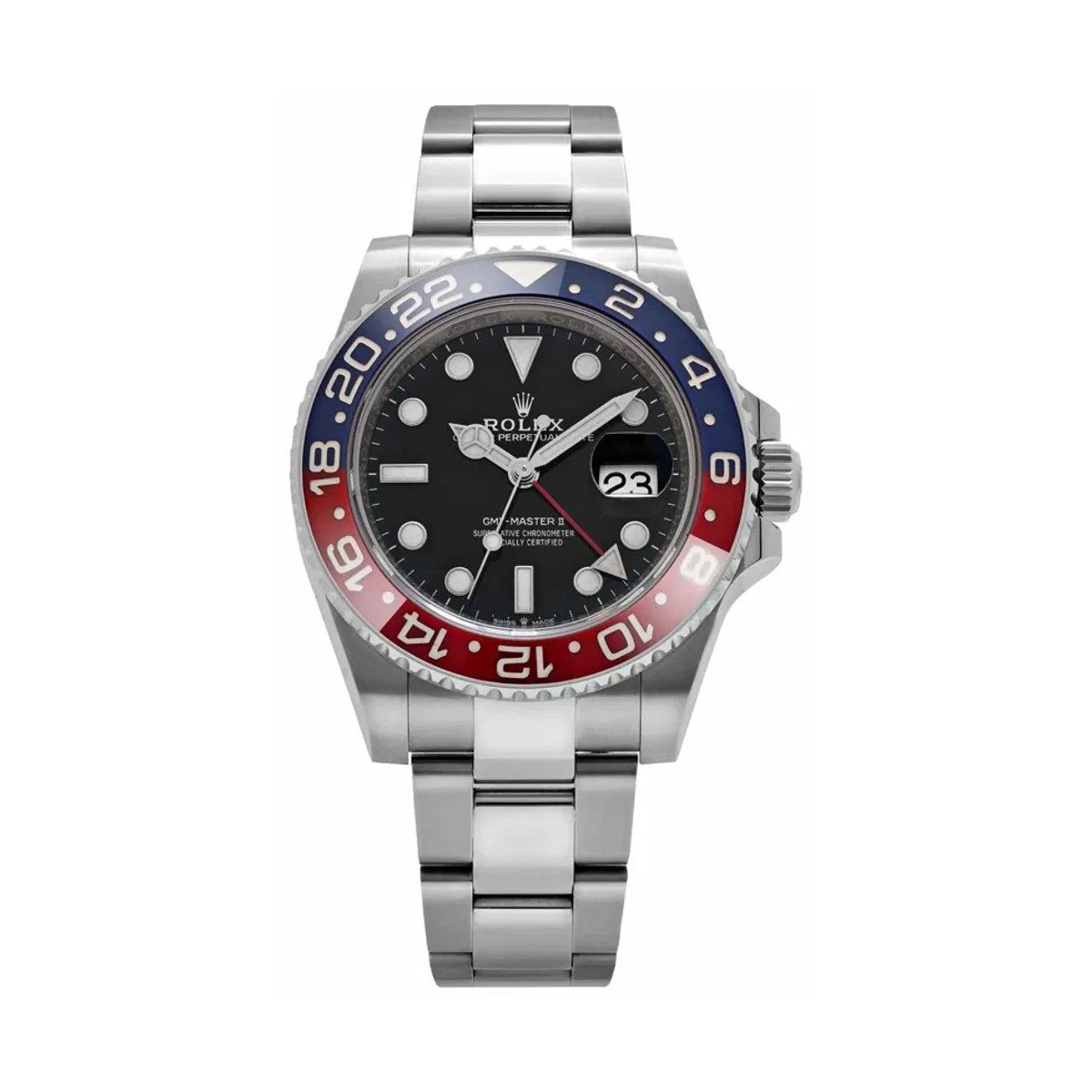
The GMT-Master II Pepsi (ref. 126710BLRO) is the prestige pick. Red/blue ceramic bezel, Jubilee bracelet, this reference trades at or above retail on the used market. Demand consistently outpaces supply. If you're buying for long-term hold, the Pepsi is hard to argue against.
The Daytona (ref. 126500LN) is the grail tier. Even in the post-hype correction, clean Daytonas don't come up often and don't sit when they do. Expect to pay a premium, but the premium is justified by genuine scarcity and collector demand that has nothing to do with hype cycles.
References to Approach Carefully
The Datejust is Rolex's volume seller, and it shows in resale. Two-tone and yellow gold variants are especially soft. They appeal to a narrower buyer pool and stainless examples are competing against thousands of similar listings. Don't count on appreciation here.
The Air-King (ref. 126900) polarizes the market. Some buyers love the busy yellow-on-black dial design, others find it garish. That split opinion compresses resale velocity. It's a perfectly good watch, just don't expect it to outperform the sporty Oyster Professional line.
The Yacht-Master in stainless occupies an awkward position, priced above the Submariner at retail but without the same secondary demand. If you're looking for pure investment utility, it underperforms relative to its cost.
What Condition Actually Costs You
Box and papers (B&P) can swing a Submariner $800 to $1,500 depending on the reference and buyer. That gap has widened as buyers have gotten more sophisticated. If the box shows damage or the cards are missing, expect a further discount.
Polish marks on the case and bracelet are significant, a polished Rolex is harder to sell and harder to sell well. The market knows the difference between a watch that's been worn and a watch that's been polished to hide wear. Keep your watch unpolished. If you're buying to eventually resell, specifically seek out unpolished examples and pay the premium for them.
Service history matters less than B&P for most buyers, but for vintage references it matters considerably. Know your audience. If you're buying a ref. 5513 Submariner, the buyer pool cares deeply about originality, matching tritium plots, and untouched cases.
One rule that saves money: don't buy a Rolex during its first 6 to 12 months on the secondary market. New references often carry an early premium that corrects as supply normalizes. Let the market find its floor before committing.
The Bottom Line
Rolex isn't going anywhere as the dominant resale brand. The hype correction has made the market healthier, not weaker. Buy the references with proven liquidity, prioritize condition and originality, and don't chase the grey market premium on recently released references, wait for the dust to settle. The Submariner, Pepsi GMT, and Daytona have earned their reputations over decades. They'll still be earning them a decade from now.